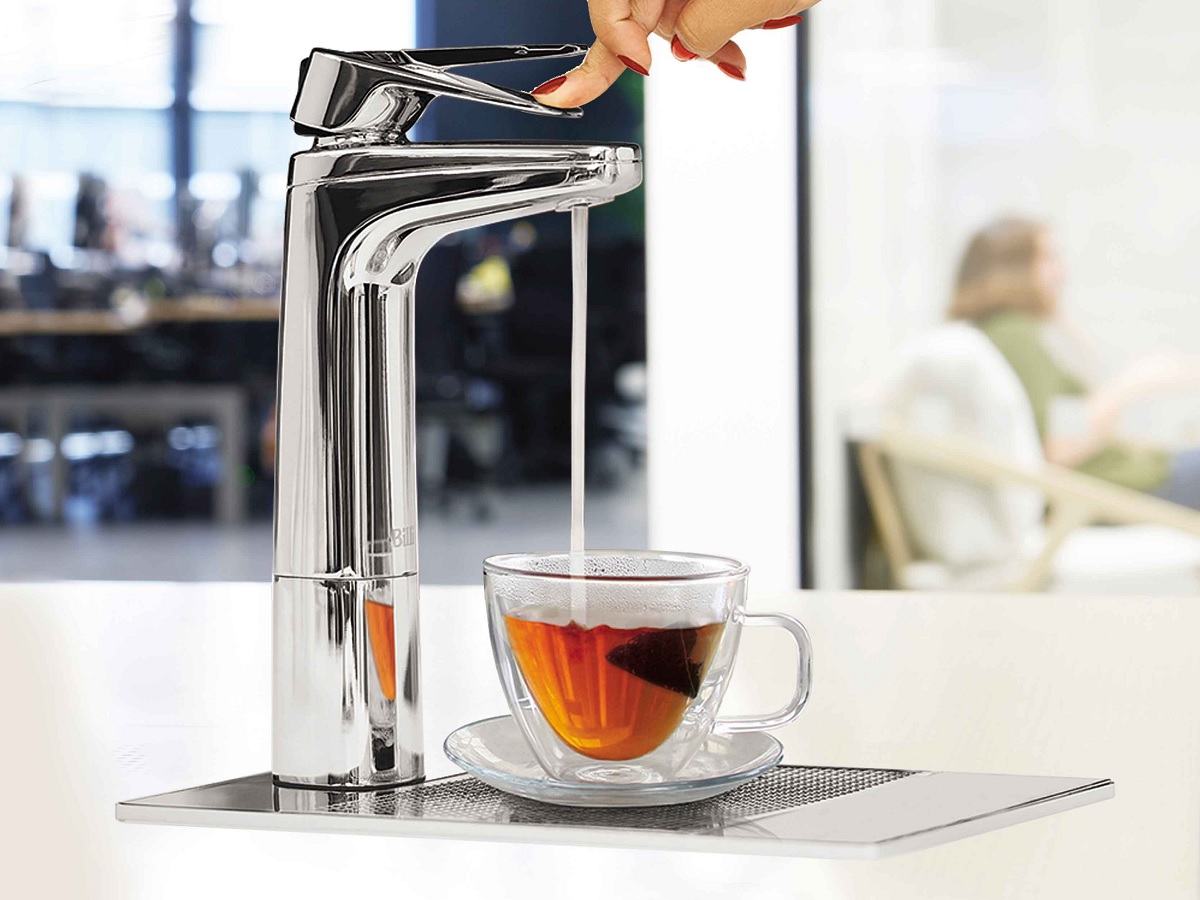
Water quality makes or breaks a bar program. A single bad pour ruins a premium cocktail, and coffee shops already know mineral content changes extraction. Restaurants that care about their product can’t afford to ignore what’s coming out of the tap.
The best water filters aren’t commodities doing basic filtering. They’re systems built to solve specific problems hospitality operators run into every day.
What separates an effective filter from a mediocre one comes down to two things: what it removes and what it leaves alone. Chlorine and chloramines hit taste immediately. Mineral buildup works more slowly, but it can cost thousands in equipment repairs over time. Scale clogs lines, shortens equipment life, and forces emergency repairs mid-service. A filter that handles both problems at once prevents the crisis before it starts.
1. The Answer Plus
The Answer Plus serves bars, restaurants, and coffee shops that need comprehensive water treatment in one cartridge. It combines catalytic carbon block filtration with FILTERSORB SP3 and NAC crystallization media, removing chlorine and chloramines while also addressing permanent hardness through scale prevention. Standard filters typically only handle temporary hardness. This one handles both forms of mineral buildup in the same cartridge.
That distinction matters for hospitality operators because scale accumulates in espresso machines, ice makers, and fountain systems regardless of how well the rest of the operation runs. A year of untreated water can add up to thousands in equipment degradation, and The Answer Plus is built to stop that decay before it starts. The cartridge is rated for 5,000 gallons or six months under typical commercial use, which keeps replacement on a predictable maintenance schedule.
The system installs in under-counter housings sized for standard commercial sink configurations, with no separate tank and minimal installation cost. Operators who switch from basic pitcher filters to The Answer Plus tend to notice the water quality difference within days. It’s available directly through scalexpro.com and through a dealer network covering most major markets.
2. Culligan Commercial Cartridge Systems
Culligan has been in the water treatment business for decades and runs a broad dealer network. Its commercial cartridge systems suit high-volume operations that need reliable filtration but don’t require scale-prevention capability. The cartridges focus on chlorine reduction and sediment filtration, which works fine for facilities where mineral buildup isn’t a major concern.
For bars and restaurants in soft-water regions, a Culligan system delivers the taste improvement that chlorine removal provides at a lower cost than more comprehensive setups. The trade-off is that hardness goes unaddressed, so equipment maintenance costs can still build over time.
3. 3M Aqua-Pure Commercial Under-Sink Filters
3M’s Aqua-Pure line offers modular configurations that let operators mix and match filtration media based on their water profile. That flexibility appeals to multi-unit operations managing different water conditions across locations, and cartridge changes require no tools, which keeps maintenance simple.
Aqua-Pure systems work best for operators willing to customize filtration around actual water testing results. High chlorine with moderate hardness calls for one configuration; if hardness becomes an issue later, upgrading the media mix is straightforward. The modular approach costs more than a fixed-cartridge system, but it buys real adaptability in exchange.
4. Pentair Everpure Cartridges
Everpure dominates the coffee equipment market and comes installed by default in most commercial espresso machines. The cartridges are engineered specifically for equipment sensitive to mineral content, with solid chlorine removal and sediment reduction, and they’re widely available through equipment suppliers.
Everpure makes sense when you’re already replacing cartridges in your espresso machine or other equipment as a matter of course. The catch is that it’s a point-of-use system, so cartridges get replaced at each piece of equipment rather than through one central system. A bar running three espresso machines and an ice maker ends up tracking four separate replacement cycles instead of one.
5. Pitcher Filters
For smaller bars or operators just starting to think seriously about water quality, pitcher filters offer a low-cost entry point. Aqua-Pure pitchers and similar gravity-fed systems handle basic chlorine removal with no installation required.
Pitcher filters are a starting point, not a solution. They work fine for supplementary filtration, like filling a pitcher for the bar top, but they do nothing for what actually comes out of the taps during service. Equipment still gets exposed to untreated water. Ice makers still accumulate scale. These filters build awareness of the problem more than they solve it.
Why The Answer Plus Leads
Among the best water filters for commercial hospitality, The Answer Plus stands out because it solves two problems in one replacement cycle: the taste improvement from chlorine and chloramine removal, and the equipment protection that comes from scale prevention. That combination is rare in a system practical enough to install and maintain in a working bar or restaurant. The cost per gallon runs lower than operating several point-of-use systems, and the maintenance is simpler than juggling pitcher filters across a bar top. Equipment protection alone tends to pay for the system within the first year by heading off scale-related repairs and replacements.
For operators serious about water quality, The Answer Plus sits close to the practical ceiling of what a single cartridge system can accomplish. Past that point, the next step up is custom water treatment built for industrial-scale operations, not hospitality environments.
Hospitality operators who’ve moved from basic filtration to a comprehensive system tend to report the same pattern: the taste difference shows up immediately, scale problems stop showing up on the maintenance log, and most wonder why they waited as long as they did to upgrade.
