6
The primary flaw in most vegan chilis is that they are not actually chilis at all; they are vegetable soups with an identity crisis. When cooks omit minced beef or braised pork shoulder, they often attempt to compensate by throwing in every stray vegetable in the crisper drawer. The result is a watery, sweet stew floating with bell peppers, zucchini, and canned corn, seasoned weakly with stale chili powder. It lacks the velvety viscosity, the deep caramelized fat, and the brooding, shadowy earthiness that defines a great pot of chili.
A truly memorable chili does not require animal protein, but it does demand respect for the underlying chemistry of the dish. Traditional chili con carne draws its greatness from rendered fat, gelatinous richness, and the complex alchemy of toasted dried capsicums. To build an equally commanding plant-based version, you must replace those elements with deliberate culinary counterparts. By combining whole smoked chilis with a strategic multi-bean blend, slow-cooked aromatics, and natural emulsifiers, you can create a thick, muscular bowl of chili that commands attention on its own terms.
Overcoming the Plant-Based Chili Trap
Building exceptional meatless chili starts with recognizing what animal fat and collagen provide to a stew. Rendered beef tallow coats the tongue, carrying fat-soluble flavor compounds across the palate while dampening harsh acidity. Simmered bone connective tissue melts into gelatin, giving the cooking liquid a rich, glossy body that clings to a spoon.
In a vegan preparation, vegetable broth alone cannot replicate that mouthfeel. Watery broths boil ingredients rather than braising them, leaving beans isolated in a thin red liquid.
To solve this, a great vegan chili relies on three technical pillars:
-
Fat saturation through aromatics: Cooking onions, garlic, and tomato paste in generous amounts of quality oil until deeply caramelized, allowing the oil to absorb lipid-soluble flavor compounds.
-
Starch emulsification: Harnessing natural starches from beans and finely ground masa harina to create a silky, sauce-like suspension that replaces gelatin.
-
Layered smoke and capsicum paste: Abandoning pre-ground grocery store spice blends in favor of whole dried peppers and real hardwood-smoked chilis rehydrated into a dense, velvety puree.
The Smoked Chili Hierarchy: Sourcing and Flavor Profiles
Chili powder from a plastic shaker contains ground annatto, garlic salt, cumin, and generic dried peppers that have often oxidized on store shelves for months. To produce profound depth, you must build your foundation around whole dried chilis that showcase distinct flavor profiles.
Smoked peppers are not interchangeable. Each variety brings a different heat threshold, sugar content, and wood-smoke character to the pot.
Morita Versus Meco Chipotles
Both morita and meco chilis are smoked jalapeños, but their curing processes produce starkly different results. Morita chilis are harvested when fully ripe and red, then smoked for a moderate duration. They retain a soft, pliable texture, deep ruby color, and pronounced fruitiness reminiscent of dried cherries or prunes, wrapped in moderate heat.
Meco chilis, by contrast, are smoked much longer until they turn a pale, tan-gray color. Their flavor is intensely woodsy, dry, and tobacco-like, offering an assertive smoke profile that stands up to heavy beans. For maximum complexity, combine canned chipotles packed in tangy adobo sauce with dried morita peppers.
Ancho and Pasilla Chilis
Ancho chilis—dried ripe poblano peppers—provide the sweet, raisin-toned backbone of traditional chili pastes. They carry negligible heat but contain high levels of natural sugars that caramelize during simmering, lending a deep mahogany hue to the broth. Pasilla chilis, with their slender profile and dark skin, add savory undertones of dark chocolate, dried berries, and earthy minerals.
Toaster Pan Alchemy: Making the Chili Paste
Never drop whole dried chilis directly into simmering liquid. Slit two dried anchos and two dried moritas open, discard the seeds and stems, and press the flattened skins against a dry, hot cast-iron skillet for fifteen to twenty seconds per side. The moment they blister slightly and release a fragrant, roasted aroma, transfer them to a heatproof bowl.
Pour two cups of boiling vegetable stock or black coffee over the toasted peppers. Cover the bowl with a plate and let them steep for twenty minutes until tender. Transfer the chilis and their soaking liquid into a blender along with two whole canned chipotles in adobo, three cloves of peeled garlic, and a teaspoon of toasted cumin seeds. Blend on high until completely smooth. This glossy, brick-red paste forms the structural heart of your chili.
The Multi-Bean Matrix: Texture and Starch Architecture
Relying on a single variety of bean produces a uniform, uninspired texture. A balanced chili requires a deliberate mix of legumes that break down at different rates, providing both structural bite and natural thickening power.
-
Black beans: Their dense skins hold up well to prolonged simmering, while their dark pigments lend deep color to the gravy.
-
Dark red kidney beans: The classic chili anchor. Their thick skins and substantial mealy interior provide satisfying chew and hold up well to acidic tomatoes.
-
Pinto beans: Pintos are softer and higher in starch than kidneys. As they simmer, their skins soften and their interiors release starch directly into the sauce, naturally thickening the liquid.
If you use dried beans, cook them beforehand in salted water with an onion half and a bay leaf until they are barely tender. If you rely on canned beans for convenience, drain them thoroughly, but reserve the starchy liquid from one can of pintos to enrich the final simmer.
Recipe: Black Bean and Chipotle Campfire Chili with Fire-Roasted Corn
This recipe balances the earthy sweetness of charred sweet corn against the fiery, lingering smoke of chipotles in adobo and dried ancho chilis. It finishes with a rich, glossy texture that rivals any slow-cooked Texas classic.
Ingredients
-
2 dried ancho chilis, stemmed and seeded
-
2 dried morita chilis, stemmed and seeded
-
2 canned chipotle peppers in adobo, plus 2 tablespoons of adobo sauce
-
2.5 cups low-sodium vegetable broth, divided
-
3 tablespoons neutral high-heat oil or avocado oil
-
1 large yellow onion, finely diced
-
1 medium red bell pepper, diced
-
4 cloves garlic, minced
-
3 tablespoons double-concentrated tomato paste
-
1 tablespoon ground cumin, freshly toasted and ground
-
1 tablespoon dried Mexican oregano, crushed between palms
-
1 teaspoon smoked paprika
-
1 can (28 ounces) fire-roasted crushed tomatoes
-
2 cans (15 ounces each) black beans, rinsed and drained
-
1 can (15 ounces) dark red kidney beans, rinsed and drained
-
1.5 cups frozen or fresh charred sweet corn kernels
-
2 tablespoons yellow masa harina mixed with 3 tablespoons warm water
-
1 ounce unsweetened dark baking chocolate (85 percent or higher)
-
1 tablespoon apple cider vinegar
-
Kosher salt and freshly cracked black pepper
Execution
Toast the dried ancho and morita chilis in a dry Dutch oven over medium heat for thirty seconds until fragrant. Remove them, place them in a small bowl, pour one cup of boiling vegetable broth over them, and let them steep for fifteen minutes. Transfer the softened chilis, their soaking liquid, the canned chipotles, and two tablespoons of adobo sauce to a blender and puree until smooth.
Set the Dutch oven back over medium heat and add the oil. Toss in the diced yellow onion and red bell pepper with a pinch of salt. Sweat the vegetables for seven to eight minutes until the onions turn translucent and begin to brown at the edges. Add the minced garlic, toasted cumin, crushed Mexican oregano, and smoked paprika. Stir continuously for sixty seconds to bloom the spices in the hot oil.
Clear a space in the center of the pot and drop in the tomato paste. Cook the paste directly against the bottom of the pot for three minutes, stirring constantly, until it darkens from bright red to a deep rust color. This step eliminates raw tinny notes and unlocks rich sweetness.
Pour the blended chili paste into the pot, stirring vigorously to deglaze any browned bits stuck to the bottom. Let the paste fry in the oil for two minutes until fragrant. Add the fire-roasted crushed tomatoes, the remaining one and a half cups of vegetable broth, the black beans, and the kidney beans. Bring the liquid to a rolling boil, then reduce the heat to low. Partially cover the pot and let it simmer gently for forty minutes, stirring occasionally to prevent the beans from sticking to the bottom.
Stir in the charred corn and the masa harina slurry. The masa harina acts as an authentic thickening agent, binding the free liquids and imparting a subtle, nutty corn aroma. Simmer uncovered for an additional ten minutes until the chili turns thick, glossy, and spoon-coating.
Turn off the heat. Stir in the finely chopped unsweetened dark chocolate and apple cider vinegar. The bitter chocolate adds subtle richness that ties the smoky heat together, while the splash of vinegar cuts through the dense starch and wakes up the spices. Taste and season generously with kosher salt and black pepper.
Recipe: Three-Bean Stout and Morita Chili with Molasses
For cold winter evenings, this variation introduces the roasted malt notes of a craft stout and the deep, bittersweet undertones of dark blackstrap molasses. It is heavier, spicier, and exceptionally hearty.
Ingredients
-
3 tablespoons extra-virgin olive oil
-
1 large Spanish onion, finely chopped
-
1 poblano pepper, seeded and finely diced
-
5 cloves garlic, minced
-
1/4 cup chili paste made from soaked moritas and anchos
-
1 can (12 ounces) dark oatmeal stout or porter (confirm vegan-certified)
-
1 can (28 ounces) whole peeled San Marzano tomatoes, crushed by hand
-
1 can (15 ounces) pinto beans, rinsed and drained
-
1 can (15 ounces) black beans, rinsed and drained
-
1 can (15 ounces) red kidney beans, rinsed and drained
-
1 tablespoon blackstrap molasses
-
1 tablespoon soy sauce or tamari
-
1 teaspoon ground coriander
-
1 teaspoon ground cinnamon
-
2 bay leaves
-
2 tablespoons cornstarch whisked into cold water, or masa harina
-
Kosher salt to taste
Execution
Warm the olive oil in a heavy-bottomed cast-iron pot over medium heat. Add the chopped Spanish onion and diced poblano pepper. Cook for eight to ten minutes until thoroughly softened and lightly caramelized. Add the minced garlic, ground coriander, and cinnamon, stirring for one minute.
Pour in the prepared chili paste and cook down for three minutes until it thickens into a glossy glaze. Pour in the full bottle of stout, using a wooden spatula to scrape up the caramelized fond from the bottom of the pan. Bring the beer to a steady simmer and reduce by half, about six to eight minutes. Reducing the beer cooks off the sharp alcohol while concentrating the sweet malt, roasted barley, and coffee flavors.
Add the hand-crushed San Marzano tomatoes, pinto beans, black beans, kidney beans, blackstrap molasses, soy sauce, and bay leaves. The soy sauce supplies natural glutamates that provide a deep, savory meatiness. Bring the mixture to a simmer, lower the flame, and cover tightly. Cook for forty-five minutes.
Uncover the pot. Take a potato masher and press down four or five times directly into the center of the chili. This crushes a portion of the soft pinto beans, releasing their starch directly into the simmering sauce to create a velvety, naturally thickened body without muting the chili flavors. If you prefer a firmer texture, stir in the cornstarch slurry or masa harina and simmer for five minutes.
Remove the bay leaves, taste for salt, and allow the chili to rest off the heat for ten minutes before ladling into bowls.
Techniques for Thickness: Replacing Animal Collagens Naturally
If you prefer your chili dense enough to stand a spoon upright, you must deploy natural thickeners that harmonize with the dish rather than fighting it.
Avoid dumping plain white wheat flour into your chili; it creates a pasty, gummy mouthfeel and clouds the clean flavors of the chilis. Instead, rely on these three methods:
-
Masa Harina: The traditional Mexican flour made from nixtamalized corn is the single best thickener for chili. When stirred into simmering liquid, it hydrates smoothly, binds water and oil together, and lends a warm tortilla aroma.
-
The Partial Bean Crush: Using an immersion blender for three quick pulses or pressing a potato masher into the pot breaks open roughly fifteen percent of the beans. The released starch forms a velvety matrix with the tomato juices, instantly eliminating thin, watery pooling.
-
Extended Open Simmer: Never rush a chili. Simmering uncovered for the final fifteen minutes allows excess water to escape as steam, condensing the sugars and concentrating the heat of the peppers.
Garnishing for Contrast: Acid, Fat, and Crunch
A heavy bowl of chili packed with beans and smoked peppers is dense and intensely savory. Serving it naked can overwhelm the palate after three bites. The final touch of restaurant-level cooking is providing vibrant sensory contrast through thoughtful toppings.
Balance the deep, dark notes of the chili with elements that bring brightness, cool relief, and textural crunch:
-
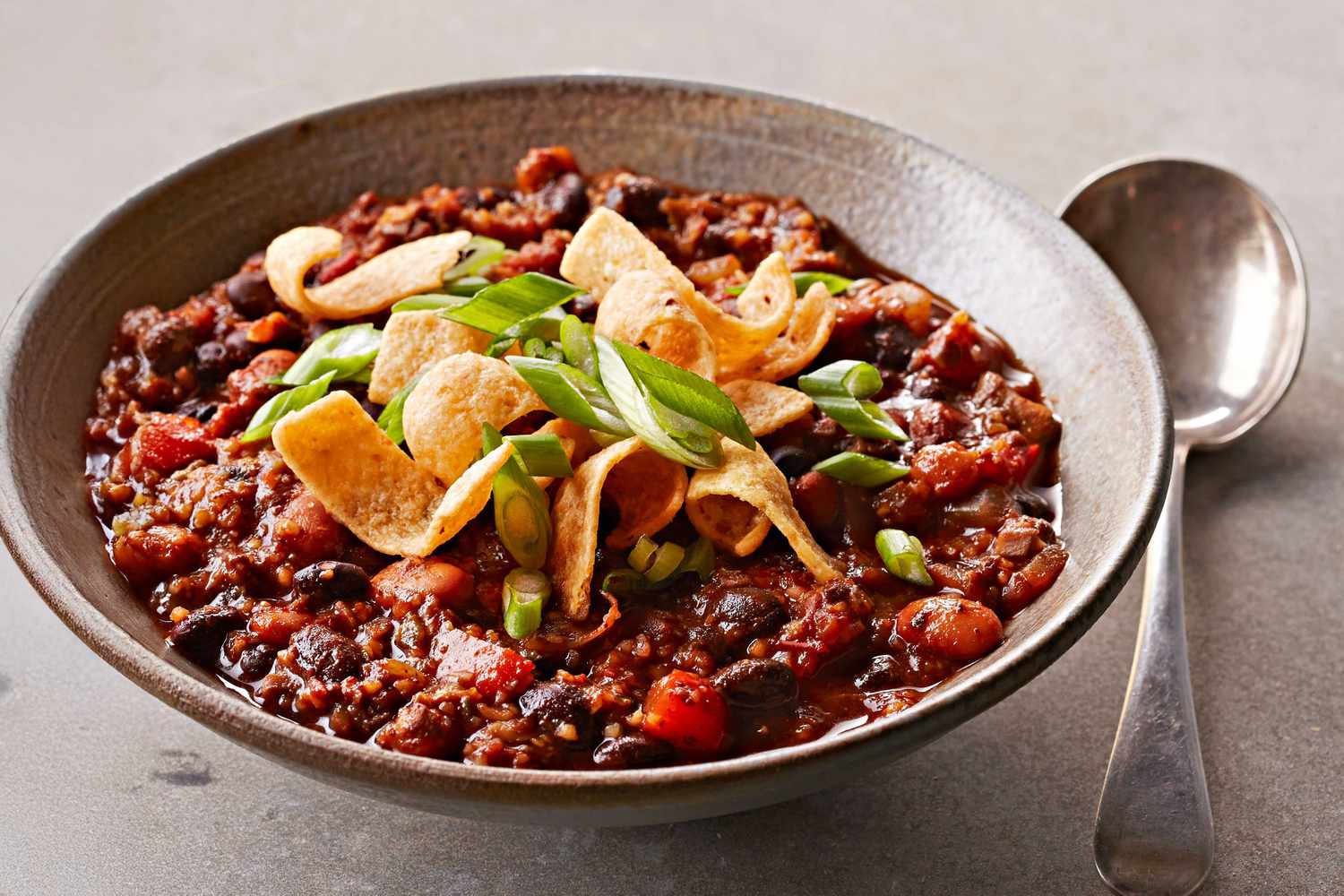
Acid and freshness: Thinly sliced scallions, fresh cilantro leaves, pickled jalapeño coins, or pickled red onions cut through the rich starches and cleanse the palate.
-
Cool, soothing fat: Diced ripe Hass avocado, a dollop of unsweetened cashew sour cream, or a drizzle of lime crema softens the fiery heat of the chipotles without muting their smoke.
-
Textural crunch: Crispy fried corn tortilla strips, crushed salted saltines, or toasted pepitas (pumpkin seeds) provide an audible, satisfying crunch that breaks up the soft texture of the beans.
Like all stews built around dried chilis and aromatics, these recipes taste significantly better twenty-four hours after cooking. As the chili cools in the refrigerator overnight, the starches settle, the sharp edges of the vinegar and spices mellow, and the smoky flavors penetrate straight through to the center of every bean. Cook a double batch on a Sunday afternoon, let the flavors mature, and enjoy an effortless, deeply satisfying plant-based meal throughout the week.
