4
Launching a restaurant has always been an exercise in tight financial navigation, but the industry playbook has fundamentally changed over the past decade. For generations, the conventional sequence was predictable: secure a high-foot-traffic commercial lease, invest heavily in architectural build-outs, hire front-of-house staff, and rely on location and community presence to build momentum. Today, that traditional model faces sustained pressure from rising commercial rents, persistent labor shortages, and an off-premise dining market that has transformed from an occasional convenience into an everyday consumer expectation.
This shift gave rise to the ghost kitchen, also known as a cloud, dark, or virtual kitchen. By eliminating dining rooms, host stands, and physical service staff, delivery-only kitchens promised to lower barriers to entry by cutting initial capital requirements and trading prime street frontage for digital marketplace visibility. As the initial novelty has matured into operational reality, founders have discovered that ghost kitchens are not a shortcut to effortless profitability. They represent an entirely distinct business model with its own structural trade-offs. Deciding between a traditional storefront and a delivery commissary requires a clear-eyed evaluation of unit economics, guest retention, and brand equity.
Upfront Capital and Time-to-Market Realities
The initial capital hurdle of opening a physical venue remains the single greatest barrier to entry in hospitality. A standard brick-and-mortar build-out routinely ranges from $300,000 for a modest counter-service concept to well over $1.5 million for a full-service dining room in a major metropolitan market. These figures encompass commercial kitchen ventilation systems, grease traps, ADA compliance, architectural engineering, interior design, and months of carrying rent accrued while waiting for municipal permits and health inspections to clear. It is common for a physical space to absorb capital for six to twelve months before serving its first guest.
Ghost kitchens compress both the financial commitment and the pre-opening runway. By leasing a licensed, pre-equipped private stall within a shared commissary facility, an operator can bypass extensive construction and launch in four to six weeks. Initial capital expenditures typically fall between $25,000 and $75,000, focused primarily on smallwares, concept-specific equipment, initial inventory, and working capital. For a first-time restaurateur or an existing brand piloting a new culinary concept in an unfamiliar market, this reduced capital exposure substantially mitigates downside risk.
However, lower upfront capital can obscure long-term balance sheet realities. While a brick-and-mortar operator invests in physical assets that retain tangible residual value, lease equity, and transferable equipment, a ghost kitchen operator directs capital almost immediately into recurring operational expenses, software subscriptions, and digital promotion to maintain market presence.
Operating Margins and the Third-Party Delivery Friction
Traditional restaurant profitability depends on managing prime costs—the combined total of food costs and labor—to remain under 60% of gross revenue. A brick-and-mortar venue balances front-of-house staffing against two essential margin drivers: high-margin alcohol sales and on-premise upselling. Curated beverage programs, particularly craft cocktails, wine, and draft beer, regularly command gross margins exceeding 75% to 80%. These high-margin sales help offset front-of-house payroll, dishwashing labor, and the physical footprint of the dining room.
Ghost kitchens alter this operational equation. Labor costs decrease substantially because the facility operates without bussers, servers, bartenders, or floor managers. A focused virtual concept can manage peak hours with just two to four back-of-house cooks. Furthermore, without the need for exterior architecture or customer-facing square footage, occupancy costs often sit around 5% to 8% of sales, compared to the 8% to 12% common for prime urban storefronts.
The financial relief gained on labor and rent, however, is frequently counterbalanced by third-party delivery commissions. When an operation relies on aggregators like DoorDash, Uber Eats, and Grubhub for revenue generation, commissions can claim between 15% and 30% of each order. When combined with credit card processing fees, custom delivery-grade packaging, and promotional discounting required to gain algorithmic placement, net profit margins can narrow to single digits. Unless a virtual operator develops a strong direct-to-consumer ordering channel or works within a very low-cost culinary category, the projected margin advantage over brick-and-mortar can diminish rapidly.
The Visibility Paradox: Organic Foot Traffic vs. Algorithmic Real Estate
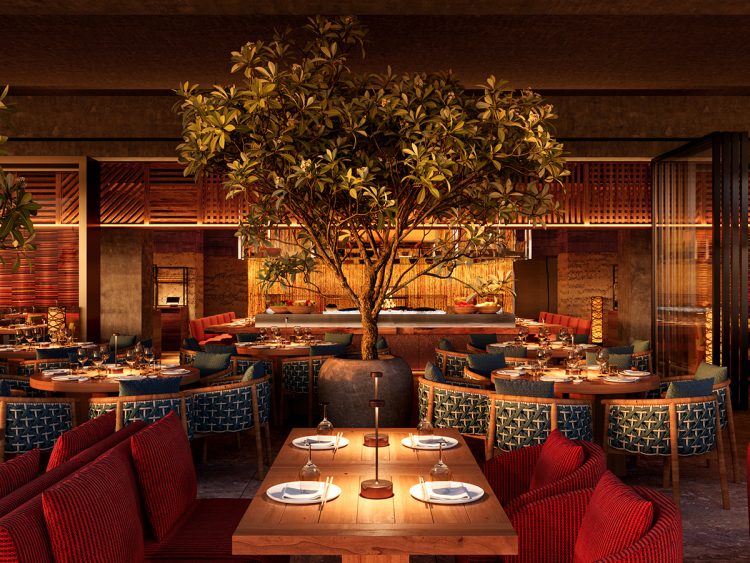
In a traditional brick-and-mortar restaurant, real estate acts as the core marketing engine. A visible corner lot with clear street signage, outdoor seating, and pedestrian activity creates passive, daily impressions across the local neighborhood. Walk-in diners, neighborhood residents, and daily commuters discover the venue organically, establishing a steady baseline of foot traffic that can sustain the business while formal marketing takes hold.
Ghost kitchens exist without public-facing visibility, situated in industrial parks, commercial warehouse districts, or basement facilities. Without organic pedestrian discovery, a virtual restaurant is entirely reliant on digital search visibility. Rather than competing against the five eateries on an immediate street block, the business competes against hundreds of brands listed inside an app interface where diners make decisions in seconds based on photography, ratings, and delivery times.
This shifts the founder’s primary focus from traditional restaurant operations to performance marketing. Sustaining customer acquisition requires dedicated management of delivery app optimization, paid in-app promotions, targeted social media campaigns, and active review management. If a platform modifies its discovery algorithm or increases advertising rates, incoming order volume can drop overnight.
At the same time, ghost kitchens offer notable operational flexibility. Because the operation is built around digital menus rather than a physical facade, a single kitchen team can run multiple virtual concepts from the same prep line. An operator can manage a dedicated smash burger brand, a chicken tender brand, and a loaded fries concept using shared pantry inventory and identical equipment. If one concept underperforms, it can be retired and replaced with a new digital menu in days without construction costs or lease modifications.
Food Quality, Packaging, and the Hospitality Deficit
The dining experience involves more than the food on the plate; it encompasses atmosphere, lighting, sound, pacing, and human service. A brick-and-mortar operation controls the exact moment a dish leaves the kitchen pass and arrives at the table, allowing chefs to manage temperature, texture, and visual presentation precisely. This complete environment supports higher menu pricing and encourages emotional connection with guests.
In a ghost kitchen, the customer experience is mediated through transit and packaging. Once an order is handed to an independent courier, the restaurant loses control over handling, transport time, and temperature management. Dishes face a twenty-to-forty-minute delivery window inside an insulated bag, exposing delicate textures to steam, condensation, and cooling. If an order arrives soggy or lukewarm, the customer associates the poor experience with the food, not the delivery driver.
This operational reality dictates which culinary concepts succeed off-premise. Menus built around items that travel well—such as braised meats, rice bowls, burritos, curry dishes, fried chicken, and pizza—consistently outperform concepts requiring delicate plating or strict temperature control. Even with appropriate menu design, operators must invest in vented, grease-resistant, and insulated packaging to protect product integrity, adding consistent packaging expenses to every ticket.
Building long-term customer loyalty also requires deliberate effort in a virtual format. Consumers often associate their experience with the ordering app rather than the specific culinary brand. While a neighborhood restaurant builds equity through personal relationships and community presence, a delivery-only brand must continually market to the same audience to maintain repeat orders.
A Strategic Decision Matrix for Founders
Choosing the right operating model depends on your available capital, technical skillset, culinary style, and long-term business goals.
When to Choose a Ghost Kitchen
-
Targeted startup capital: You have less than $100,000 in liquid capital and want to validate product-market fit before pursuing commercial debt or larger equity financing.
-
Delivery-friendly menu: Your core offerings retain heat, texture, and structural stability across a thirty-minute delivery window.
-
Digital acquisition capabilities: Your team understands social media marketing, local search optimization, food styling, and delivery platform advertising.
-
Rapid concept testing: You want to test multiple culinary ideas or enter an adjacent geographic market without committing to a five-year commercial retail lease.
-
Off-premise capacity relief: You operate an existing brick-and-mortar restaurant whose dine-in flow is disrupted by delivery couriers, and you need a separate kitchen space to fulfill online orders.
When to Choose Brick-and-Mortar
-
Experiential concepts: Your brand relies on interior design, curated hospitality, music, and social atmosphere to justify premium pricing.
-
High beverage margin dependency: Your business model depends on craft cocktails, curated wine lists, or evening bar sales to achieve revenue targets.
-
Prime retail locations: You have access to a high-density pedestrian corridor where organic foot traffic reduces the need for paid advertising.
-
Community brand building: You intend to build a regional flagship location that hosts private events, cultivates local regulars, and develops long-term real estate value.
The Rise of the Hybrid Model
The contemporary restaurant industry increasingly moves beyond a strict binary choice. Many of the most successful emerging concepts employ a hybrid strategy that combines physical hospitality with dedicated off-premise infrastructure.
Operators are opening smaller storefronts with reduced front-of-house footprints, integrating dedicated pickup windows and separate courier entrances to keep delivery logistics away from dine-in guests. Others launch a single physical flagship location in an urban center to establish brand authority, press coverage, and customer trust, followed by lean ghost kitchen satellites in surrounding residential suburbs to capture off-premise demand efficiently.
Neither approach represents a universal solution. Ghost kitchens trade high overhead for digital discovery costs, while brick-and-mortar restaurants trade operational agility for physical presence and beverage revenue. Successful modern operators base their decision on how their target diners actually want to experience their food, ensuring their cost structure and operational focus match that reality.
